PRESENTATION
Every watch has to be seen.

THE PHOTOGRAPH
Working With the Light
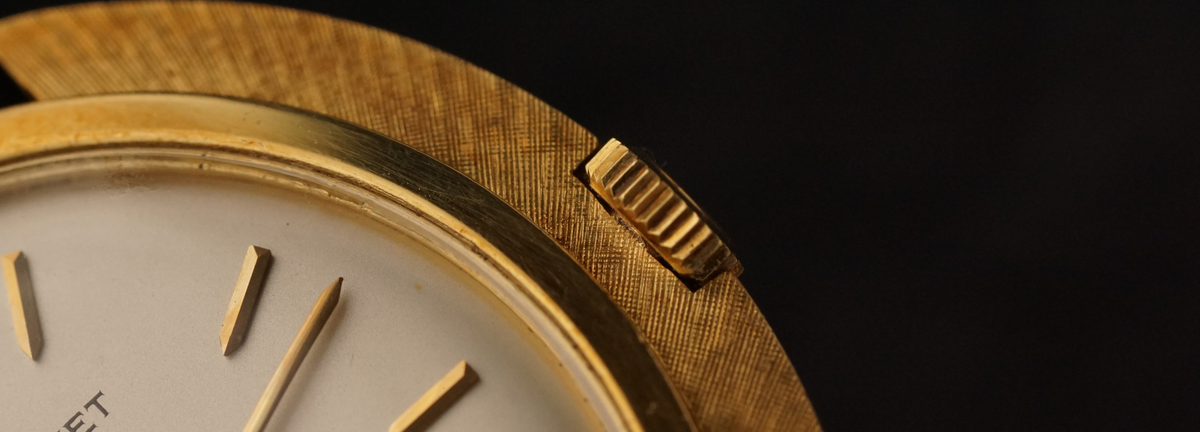
Every photograph and video on Fabsuisse is created by me. I photograph each watch using one very large window and natural light, rarely relying on studio lighting. It's a simple setup, but over time it has become an important part of how I see—and present—watches.
I am entirely self-taught. Much of what I know has come from experimenting along the way: moving a watch a few inches closer to the window, changing an angle, watching how light travels across a dial, or realizing that what worked beautifully yesterday isn't going to work at all today.
Natural light has a way of revealing things that controlled lighting sometimes doesn't. A silver dial can shift from warm to cool. Mother-of-pearl changes as the watch moves. Brushed and polished surfaces react completely differently to their surroundings. Sometimes a dial that appears almost flat straight-on suddenly comes alive at an angle.
It can also be unpredictable. The light changes with the weather, the time of day and the conditions outside. Highly reflective dials, crystals and polished finishes can be particularly difficult. As a result, our photographs aren't perfectly uniform from one watch to the next—and occasionally I miss the mark. But I'd rather work with those variables than force every watch into exactly the same photograph.

THE SETTING
The Watch Decides
The watch decides a lot of what happens next.
Sometimes I keep things minimal and let the watch do all the work. Other times the props get a little out of hand. They're my own, collected and chosen simply because I think they work with the watch in front of me. The setting may change, but the watch is always meant to remain the focal point.
We also photograph watches on the wrist and use video whenever movement tells the story better than a still image. A watch is a three-dimensional object: cases curve, bracelets articulate, crystals distort, dials reflect, and proportions can feel entirely different once a watch is worn. Those things can be difficult to understand from a traditional catalogue photograph alone.
I don't photograph vintage watches with the intention of making them look new. Patina, scratches, softened edges and other signs of age are part of the watch in front of me. I want the photographs to be beautiful, but I also want them to be useful.

THE DESCRIPTION
What We Notice
The same approach carries into our descriptions. Every description is written for the individual watch we're actually handling. Research gives us the facts, but we also write about the things we notice but the description reflects what we actually notice when handling and wearing the watch.
—the unusual lug, the way a bracelet is constructed, an unexpected texture on the dial, or simply why a particular watch caught our attention in the first place.
Every watch we offer is photographed, handled and described through our own eyes.
We want you to see the watch, not a version of it created in a studio. A watch is an object that moves, reflects light and lives on the wrist. We think it should be presented that way.
That's what we hope comes through when you see one on Fabsuisse.
